

The Spicer's Cabinet
I. The Ingredient
II. Origins & History
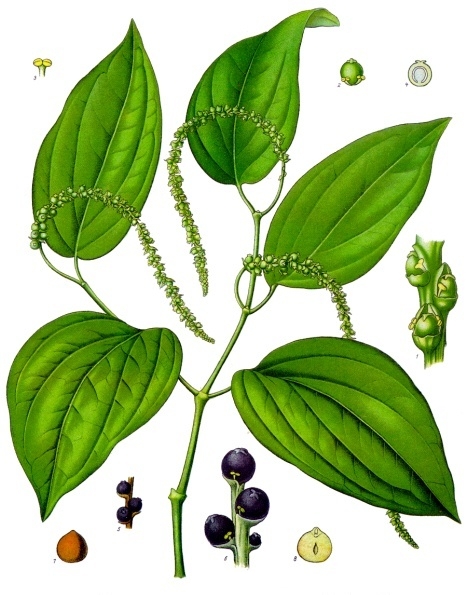
Black pepper’s familiar place beside salt conceals an extraordinary trading past. Oxford University’s Plants 400 account traces the exchange between Asia and Europe into antiquity, including Roman demand for Indian pepper. Its high value later helped support Mediterranean trading centres and European voyages seeking direct access to spices. This history concerns the fruit of a tropical vine, not chilli peppers, which belong to another plant family. Black, white and green peppercorns come from the same species, harvested or processed differently. The story is one of agriculture, trade and changing access to flavour; the modern pairings below are suggestions rather than reconstructions of a particular ancient recipe.
III. The Flavour
Dry, pungent warmth with woody, citrus-like and sometimes floral top notes. Freshly crushed peppercorns reveal more aroma than a long-open packet of powder. Origin, freshness and processing affect the balance: black pepper is not simply interchangeable with white or brined green pepper.
- Aroma
- Woody, warm and citrus-like when freshly crushed
- Texture
- Hard wrinkled dried fruits; coarse or fine when ground
- Intensity
- Pungent; strength depends on freshness and grind
IV. Culinary Affinities
Contemporary flavour suggestions, distinguished from documented historical combinations.
Vegetables: Mushrooms, potatoes and roasted roots carry pepper’s woody warmth.
Meat & poultry: Beef, pork and chicken provide a rich background for a fresh aromatic finish.
Grains & pulses: Barley, lentils and white beans suit a measured peppery accent.
Fruit & dairy: Pear, strawberries, butter and cheese offer sweet or creamy contrasts. These are contemporary flavour suggestions.
V. Companions in the Mortar
Thyme and rosemary support savoury foods; coriander seed adds a citrus-like bridge. Ginger gives a brighter pungency. Start with a clear pairing rather than assuming every warm spice belongs together.
VI. The Alchemist’s Note
Store whole peppercorns dry and away from heat and grind as needed. A coarse grind gives distinct bursts of flavour; a fine grind distributes heat more evenly. Add some near the end of cooking when fresh aroma is the aim, then taste before adding more.
VII. Sources & Further Reading
- Oxford University — Plants 400: Piper nigrum; trade and processing
- Kew POWO — Piper nigrum; current accepted name and native distribution
- Kew Species Profile — Pepper forms, culinary use and older geographic account
Reviewed October 2026. Historical imagery is not an identification guide.
Folio 6 · The Grimoire