
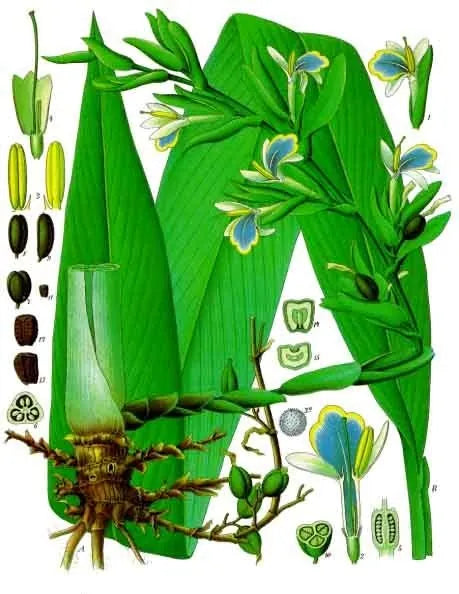

The Spicer's Cabinet
I. The Ingredient
II. Origins & History
Kew identifies south-western India as cardamom's native home and records trade within India over at least a thousand years. Its history belongs to South Asian plant knowledge and exchange, not simply to a European medieval pantry. The aromatic seeds remain an important bridge between sweet and savoury cooking. The affinities below are contemporary suggestions, not claims about a particular historical recipe.
III. The Flavour
Green cardamom is intensely fragrant: citrus-like, floral and cooling, with a resinous edge and warm spice underneath. The small dark seeds carry the flavour; the green capsule protects them. Its perfume can dominate delicate ingredients, while stale ground spice loses much of its brightness.
- Aroma
- Floral, citrus-like and resinous
- Texture
- Small hard seeds protected by a dry capsule
- Intensity
- Highly aromatic; use sparingly
IV. Culinary Affinities
Contemporary flavour suggestions, distinguished from documented historical combinations.
Meat & poultry
Chicken and lamb can carry its warm, fragrant intensity.
Fruit
Pear, apple, orange and stone fruit welcome its citrus-floral lift.
Grains & pulses
Rice provides a quiet background for its perfume; lentils offer an earthy contrast.
Dairy & other foods
Milk, cream and yoghurt soften its intensity. Coffee, chocolate and pistachio offer deeper aromatic partners.
Companions in the Mortar
Cinnamon gives a rounded, woody warmth; ginger adds a brighter, sharper heat; black pepper brings dry pungency. Saffron can accompany cardamom when both aromas are kept distinct.
V. The Alchemist’s Kitchen: Cardamom Pears with Warm Millet and Orange Yoghurt
4 breakfast portions · Preparation: 15 minutes · Cooking: approximately 25 minutes
Recipe developed for The Alchemist’s Pantry. Newly developed recipe; not yet kitchen-tested. Times are estimates; follow the doneness checks below. Any resting or chilling time is additional.
Ingredients
- 160g millet
- 400ml water
- 4 ripe but firm pears, cored and cut into wedges
- 6 green cardamom pods
- 20g butter
- 2 tbsp honey
- 1 orange, zest and 3 tbsp juice
- 200g plain yoghurt
- Small pinch of salt
Method
- Crack the pods, remove the seeds and grind the seeds finely; discard the husks. Rinse millet, combine with water and salt, bring to a boil, cover and simmer on low for about 18 minutes or follow its packet. Rest covered for 5 minutes.
- Melt butter in a wide pan. Cook pear wedges in one layer over medium heat for 4 minutes on each cut side, adjusting the heat if the butter darkens.
- Add honey, orange juice and half the ground cardamom. Simmer gently for 2–3 minutes until the pears are tender and the juices lightly syrupy.
- Mix yoghurt with the orange zest and remaining cardamom. Fluff the millet with a fork, loosening with a splash of hot water if needed.
- Divide millet between bowls, add pears and their juices, and spoon the cool yoghurt alongside.
Why this works
Grinding opens the seeds and exposes their fragrant oils. Dividing the spice between a warm glaze and a cold yoghurt gives both a mellow background and a fresh top note. Orange acidity balances the honey.
Allergens: Milk. Always check the labels of the products you use.
Cardamom strength varies: begin with four pods if yours are very fresh, then add the remaining ground seeds to taste.
VI. The Alchemist’s Note
Keep green cardamom pods intact until needed to preserve their aroma. Crush or grind the seeds shortly before use and add sparingly.
VII. Sources & Further Reading
- Kew POWO — Elettaria cardamomum; botany and native range
- Kew Species Profile — historical trade and food uses
Reviewed October 2026. Historical imagery is not an identification guide.
Folio 18 · The Grimoire