

The Root Cellar
I. The Ingredient
II. Origins & History
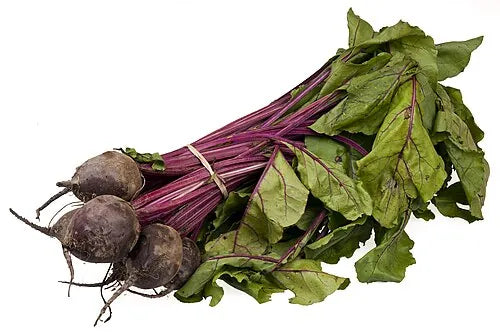
The RHS describes the development of more bulbous edible roots by the sixteenth century and their later importance in central and eastern European cooking, including borscht. The leaf here focuses on table beet rather than conflating it with industrial sugar beet. Modern red, golden and striped cultivars offer different appearances in the same kitchen role.
III. The Flavour
Sweet and earthy, with a mineral-like depth. Roasting concentrates sweetness; pickling adds an acidic counterpoint.
- Aroma
- Earthy and sweet, more mellow after cooking.
- Texture
- Crisp when raw; firm-tender and juicy when cooked.
- Intensity
- Moderate and distinctive.
IV. Culinary Affinities
Contemporary flavour suggestions, distinguished from documented historical combinations.
Dairy: yogurt, goat cheese and sour cream. Fruit: apple and orange. Nuts: walnut and hazelnut. Grains: rye and buckwheat.
Companions in the Mortar
Horseradish, dill, caraway, black pepper and ginger.
V. The Alchemist’s Kitchen: Roast Beetroot with Orange, Lentils and Walnut Dressing
4 main-course portions · Preparation: 20 minutes · Cooking: approximately 50 minutes
Recipe developed for The Alchemist’s Pantry. Newly developed recipe; not yet kitchen-tested. Times are estimates; follow the doneness checks below. Any resting or chilling time is additional.
Ingredients
- 600g raw beetroot, peeled and cut into 2cm wedges
- 250g dried green lentils
- 3 tbsp olive oil, divided
- 1 orange, segmented with 2 tbsp juice reserved
- 40g walnuts, chopped
- 1 tbsp cider vinegar
- 1 tsp Dijon mustard
- 20g parsley, chopped
- Salt and pepper to taste
Method
- Heat the oven to 190°C fan (210°C conventional). Toss beetroot with 1 tbsp oil and a little salt. Roast for 40–50 minutes, turning once, until a knife enters easily.
- Meanwhile simmer lentils in plenty of water for 20–30 minutes or the packet time until tender. Drain well.
- Toast walnuts in a dry frying pan for 3–4 minutes, stirring, then remove from the heat.
- Whisk remaining oil, orange juice, vinegar and mustard into a dressing. Toss through warm lentils with parsley and most of the walnuts.
- Fold in beetroot and orange segments gently. Season and scatter over the remaining nuts.
Why this works
Roasting concentrates beetroot’s sweetness; the citrus and mustard dressing adds acidity and pungency. Dressing the lentils separately gives an even coating before the fragile orange segments are added.
Allergens: Walnuts and mustard. Always check the labels of the products you use.
Wash beetroot before peeling and use gloves if staining is a concern. Golden beetroot can be used, but colour and cooking time may differ.
VI. The Alchemist’s Note
Scrub well before preparation. Roast or boil until suitably tender for the dish, then peel when cool enough to handle. Slice thinly for a raw preparation; protect pale ingredients from red staining.
VII. Sources & Further Reading
- RHS — Beetroot culinary development
- RHS — Growing and harvesting beetroot
- FSA — Washing fruit and vegetables
Reviewed October 2026. Historical imagery is not an identification guide.
Folio 4 · The Grimoire